

How to Calculate Billable Utilization for Your Agency
Aug 25, 2026
Define eligible client hours and available capacity, calculate utilization with a stated denominator, and distinguish the result from recorded-time share and billing value.
30 posts tagged with Time Tracking
Define eligible client hours and available capacity, calculate utilization with a stated denominator, and distinguish the result from recorded-time share and billing value.
Timers get forgotten because they live in an app nobody has open — while every request, interruption, and job update arrives in Telegram. Here's how a Telegram time tracking bot cl...
Build a client report around progress, remaining work and decisions. Follow a Northstar website-launch example and distinguish task counts, delivery judgement and portal access.
A typical agency's five-tool stack costs far more than the subscription line shows — the integration tax, the handoff hours, and the reports nobody can assemble are the real bill....

Compare hourly, fixed-price and retainer workflows with shared delivery records, distinct invoice reviews and a saved monthly retainer example.
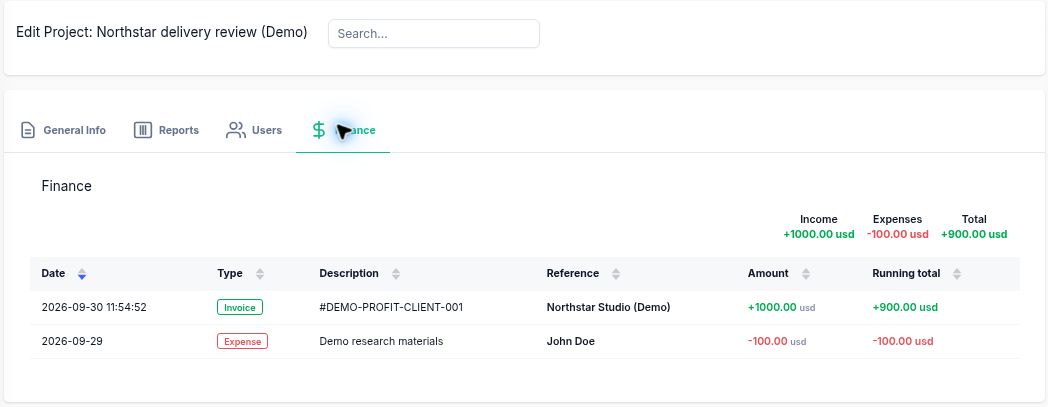
Review project profitability with a worked time-and-cost example. Separate rate-based work value, direct expenses, invoice totals and payments before calculating a contribution.
Build a client-level profitability review from checked project figures, account-service time and a stated overhead allocation. Separate modeled value, revenue and payments.

Most agency software comparisons list 40 features and rank none of them. This checklist organizes the features that actually move margin by the flow your agency already runs — lead...

Most Upwork agencies are really two businesses — platform contracts and direct clients — run on disconnected tools. Here's what breaks when you run two systems, what a consolidated...

How Upwork agencies should track time across platform contracts and direct work without keeping two sets of books. Covers Upwork's tracker vs your own system, automatic hour syncin...